Why a Leopard 50?
While Leopard catamarans are a very common sight around the USA and Bahamas, they are a lot rarer in the Mediterranean where the French manufacturers Lagoon, Fountaine Pajot, Nautitech and Bali dominate both charter and owner fleets. Hence we often get asked why we chose to buy a Leopard to cruise with our family. You can read about our decision process below, and learn more about the Leopard 50 in the great online review at https://www.katamarans.com/leopard-50/
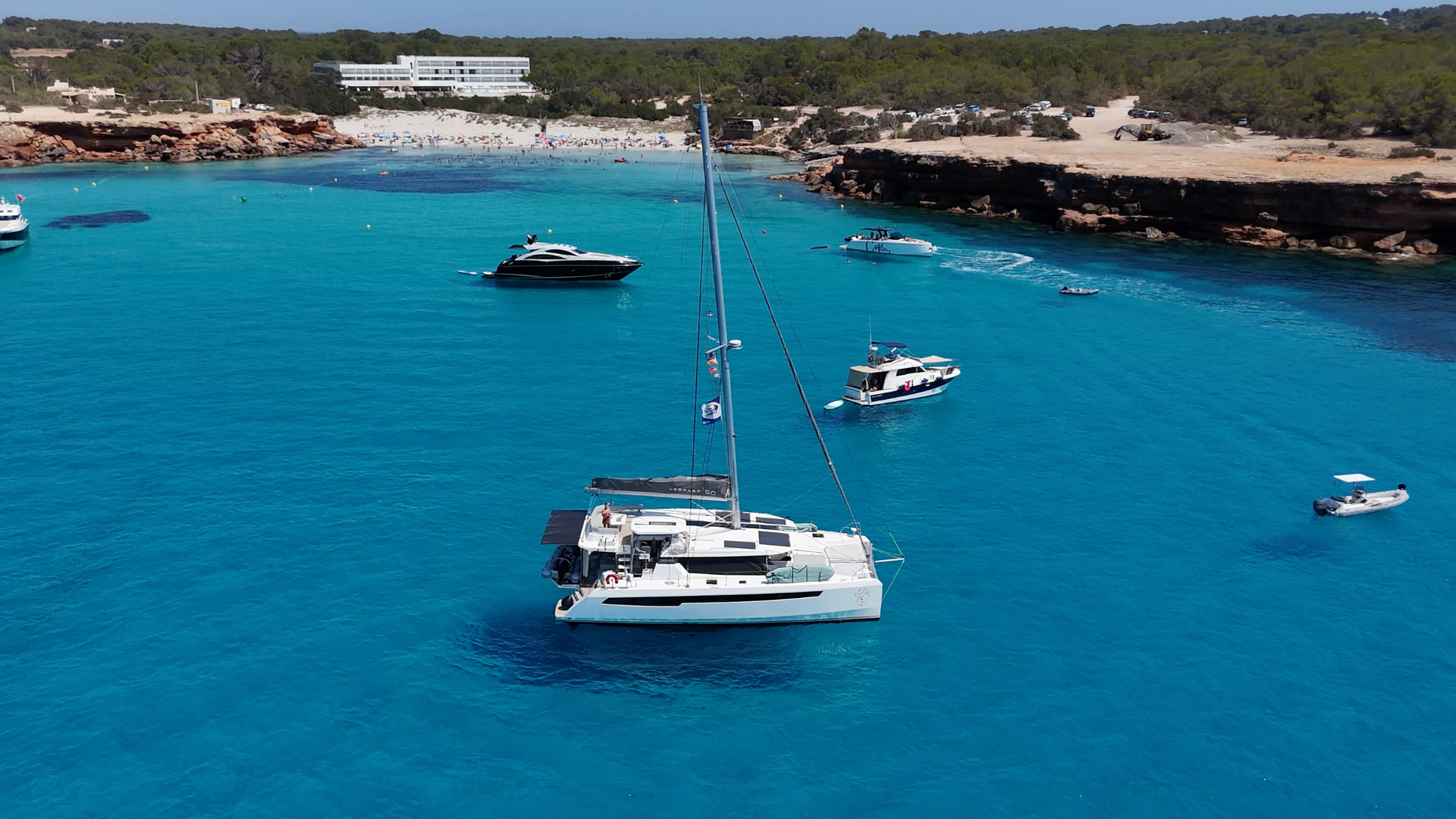
Living aboard long-term with young kids, while planning to sail offshore, and stay at anchor in fairly remote areas, we wanted a boat that offered large living spaces and storage, as well as an inherently safe layout.
We set our sight on catamarans in the 45-50 foot range, large enough for the comfort we wanted but still manageable short-handed. While a lighter and faster sailing boat would have been nice, we discarded performance-oriented models such as from Outremer, Catana or Balance due to their much higher price for a smaller living space at a given size. So like many cruising families we did consider the popular French cruising catamarans manufacturers like Lagoon, Fountaine Pajot, Bali & Nautitech. We had experienced most of them during various charter holidays, however the Leopard catamarans, which are not common in Europe, had caught our eye at a boat show and were our favourite for a few reasons, primarily comfort and safety related.
☔️ Helm position
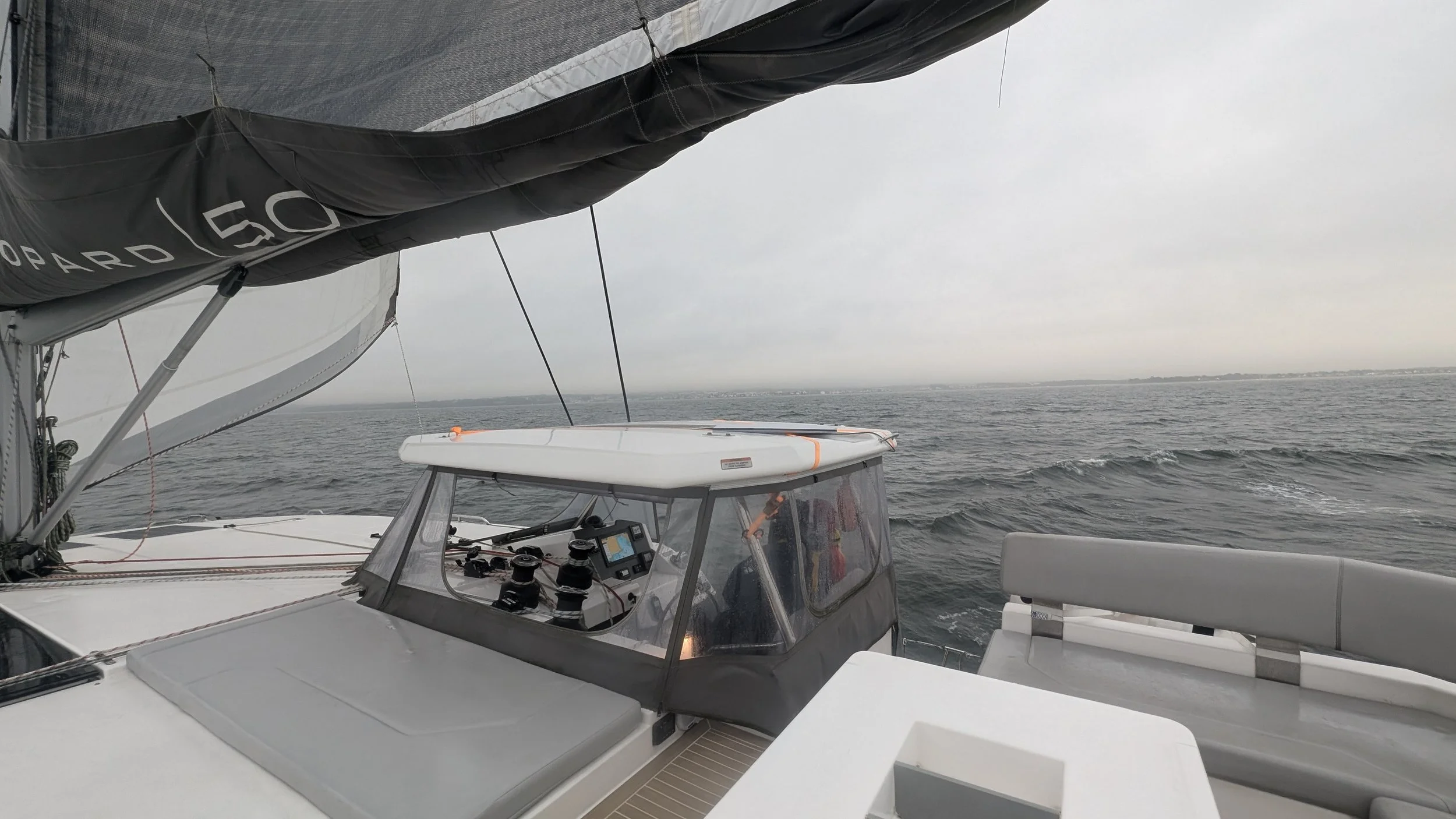
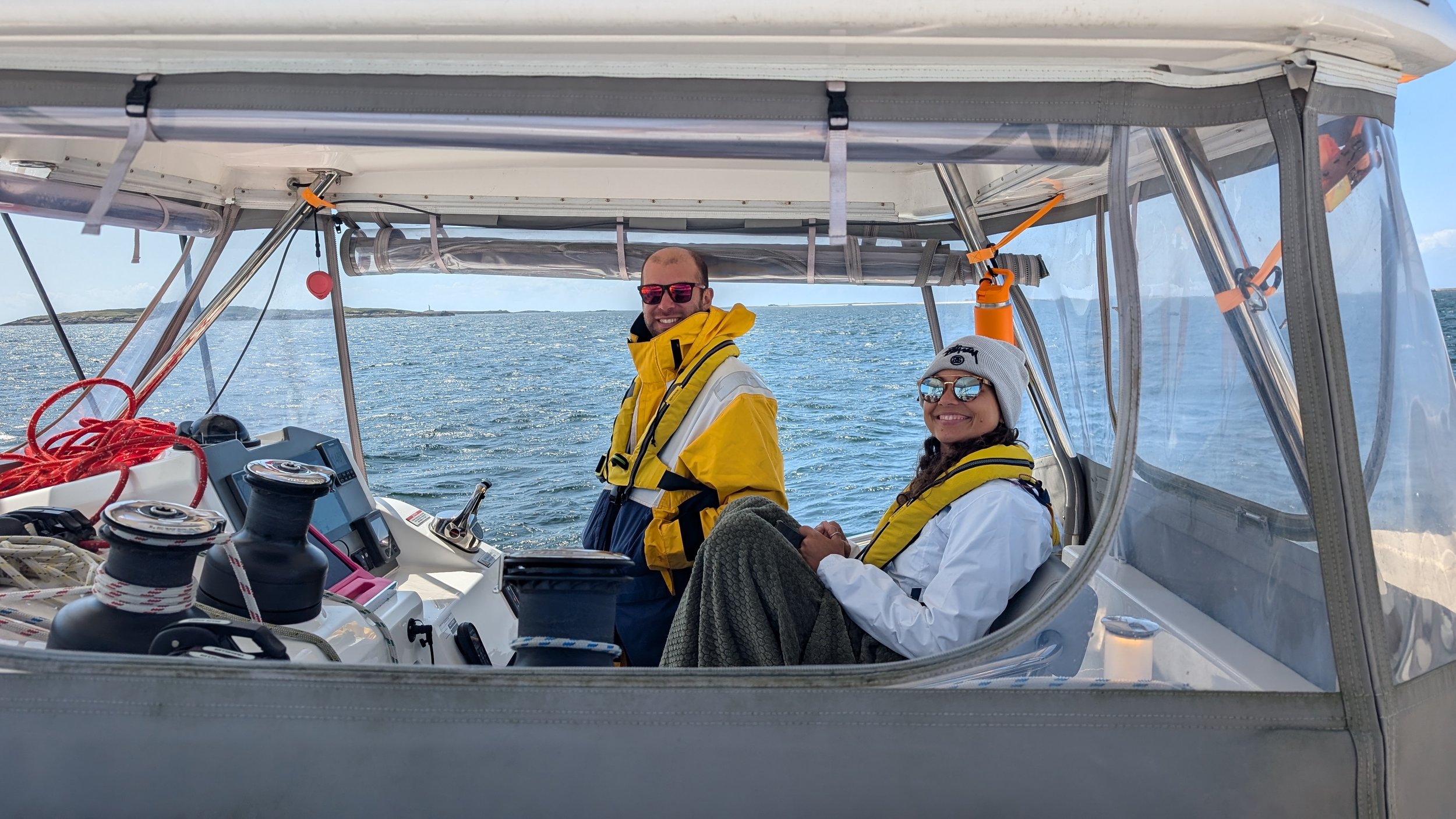
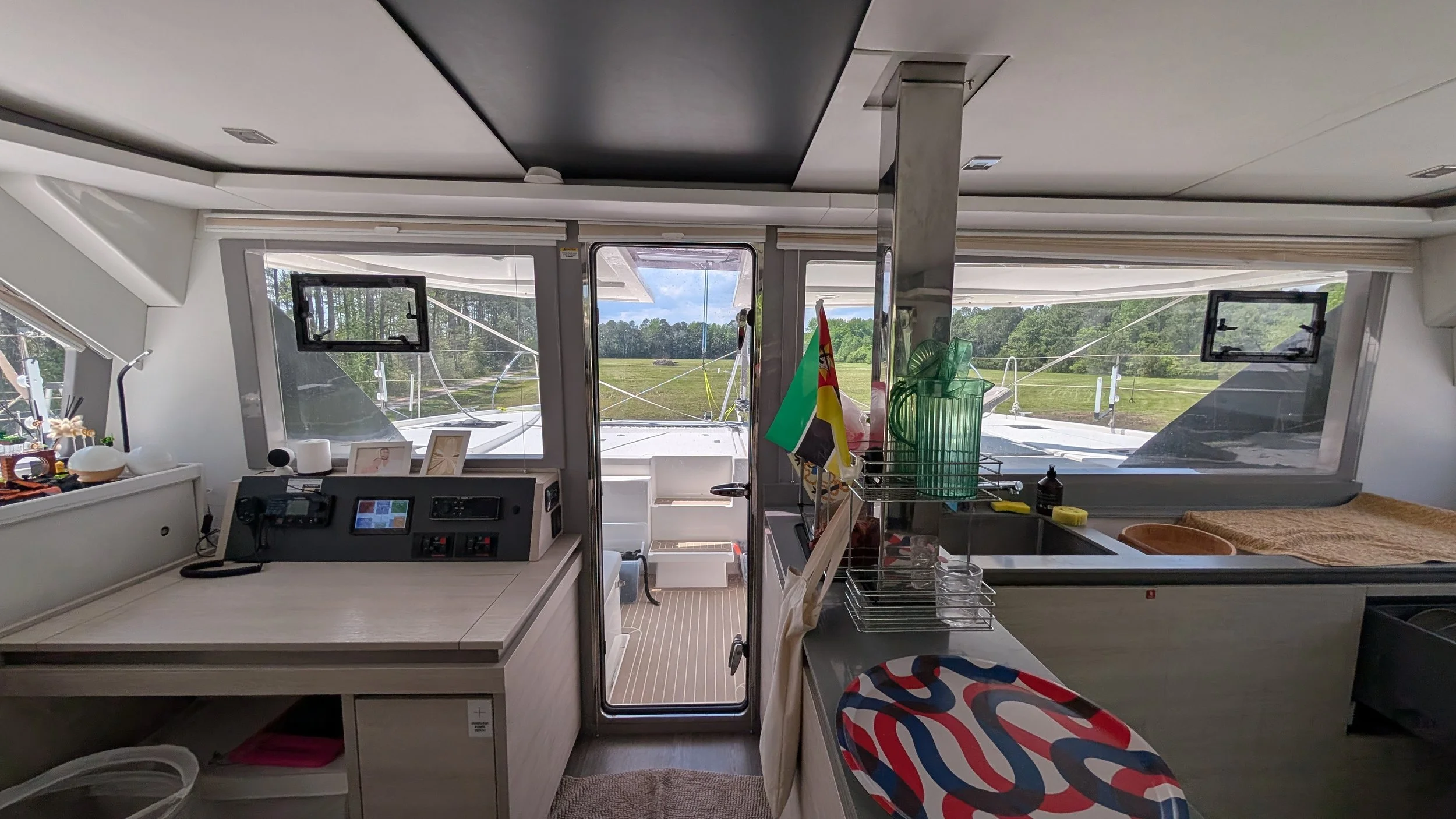
While it sacrifices some steering feel and opposite corner visibility, the mid-height helm (a.k.a bulkhead helm) is our preferred setup over the aft helm and flybridge helm. Aft helms are great for rudder feel and reverse-docking, but are very exposed to the elements in case of rough weather. Flybridge helms are great for visibility, but mean a raised boom which affects sailing performance and the ease of accessing the sail when needed, plus they make communication difficult with the rest of the crew downstairs.
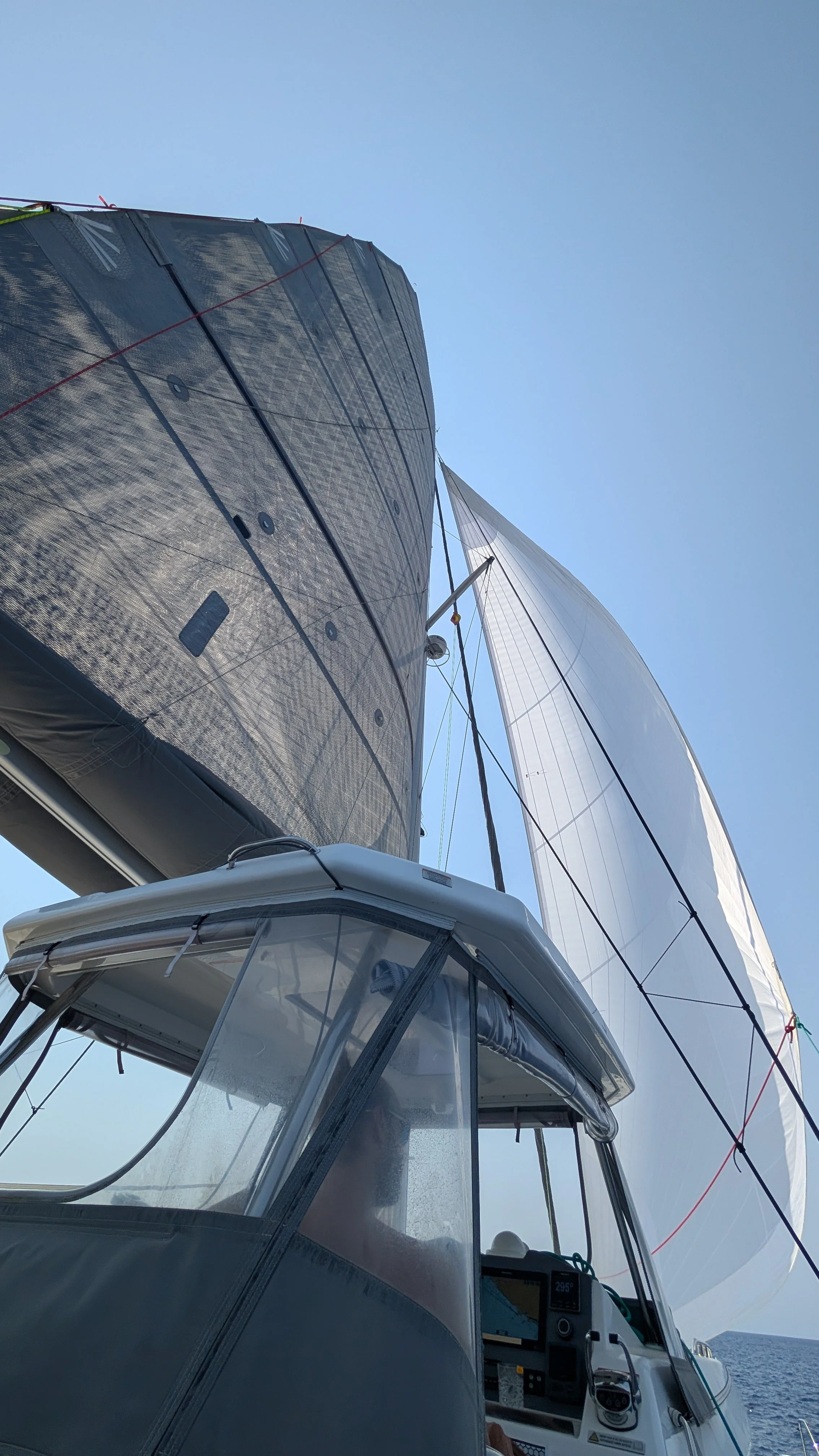
They each have their compromises, but we feel the mid helm position (which Leopard catamarans share with Fountaine Pajot and the smaller Lagoon models) is the safest and the most convenient overall. It's easy to fully enclose it to stay dry and it's always right there next to the salon to quickly grab something or adjust a sheet. Also, since all the lines come back to the helm (including reefing lines and spinnaker sheets) it's easy to sail single-handed while the other parent is busy downstairs with the kiddos.
🍹 Roof lounge and forward cockpit with front access door
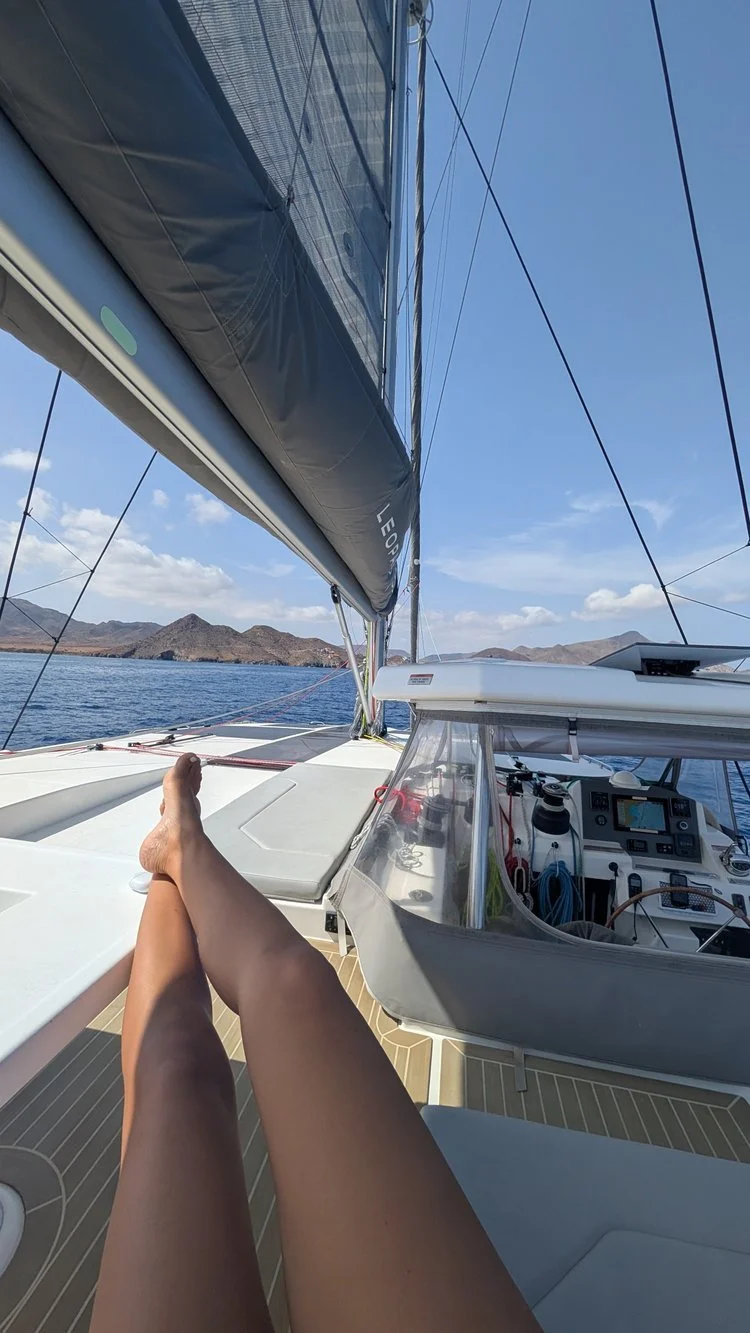
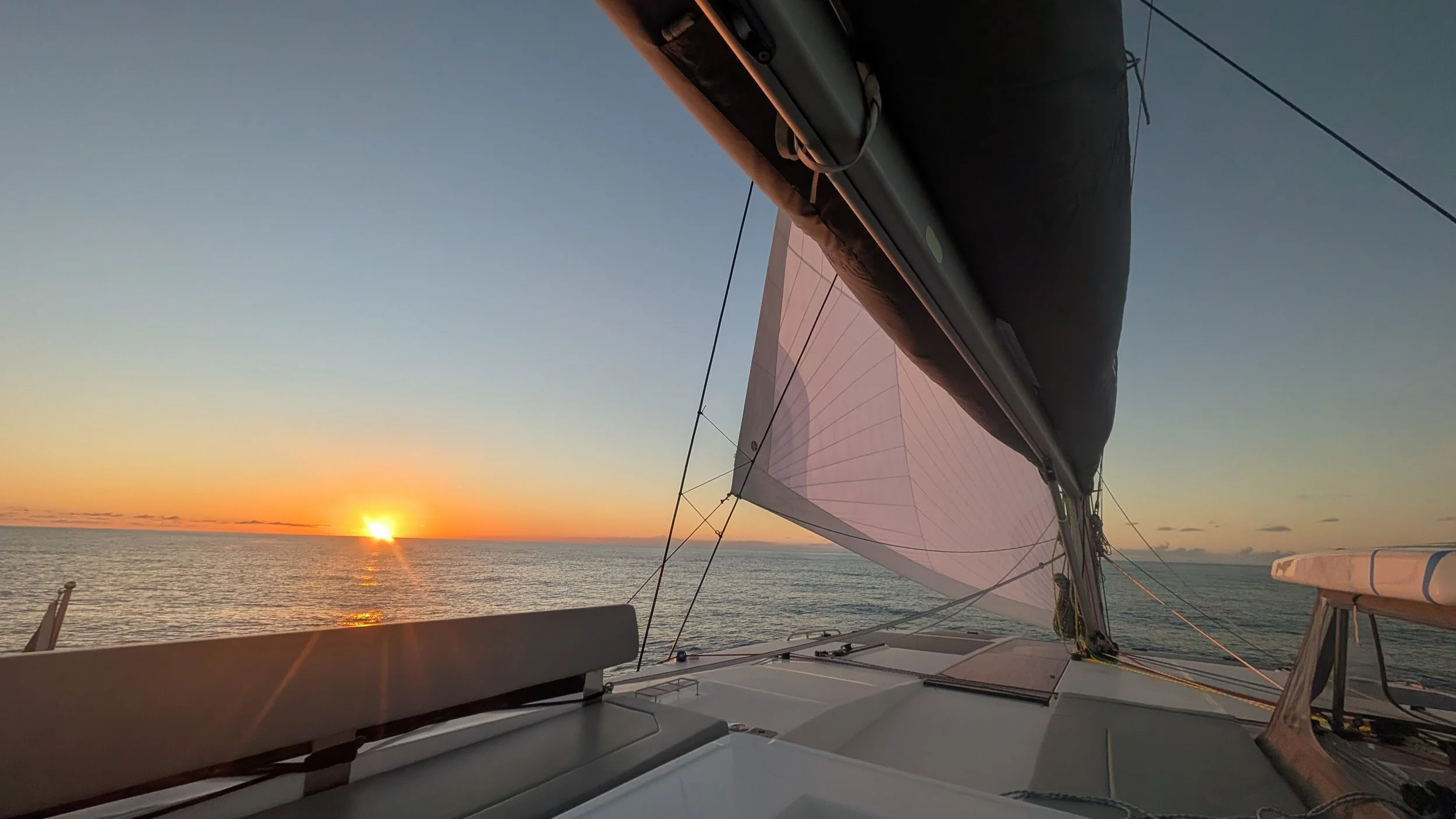
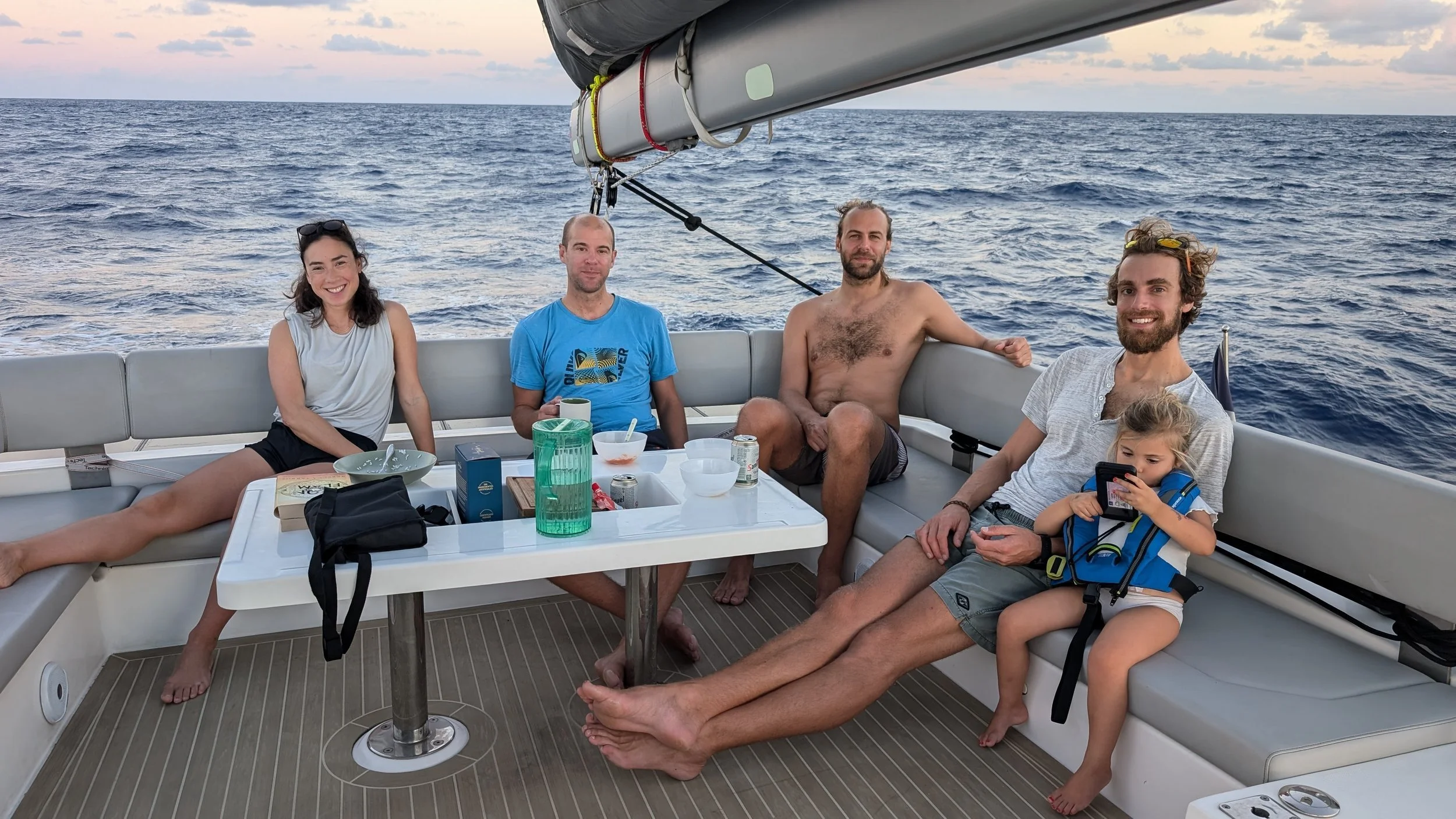
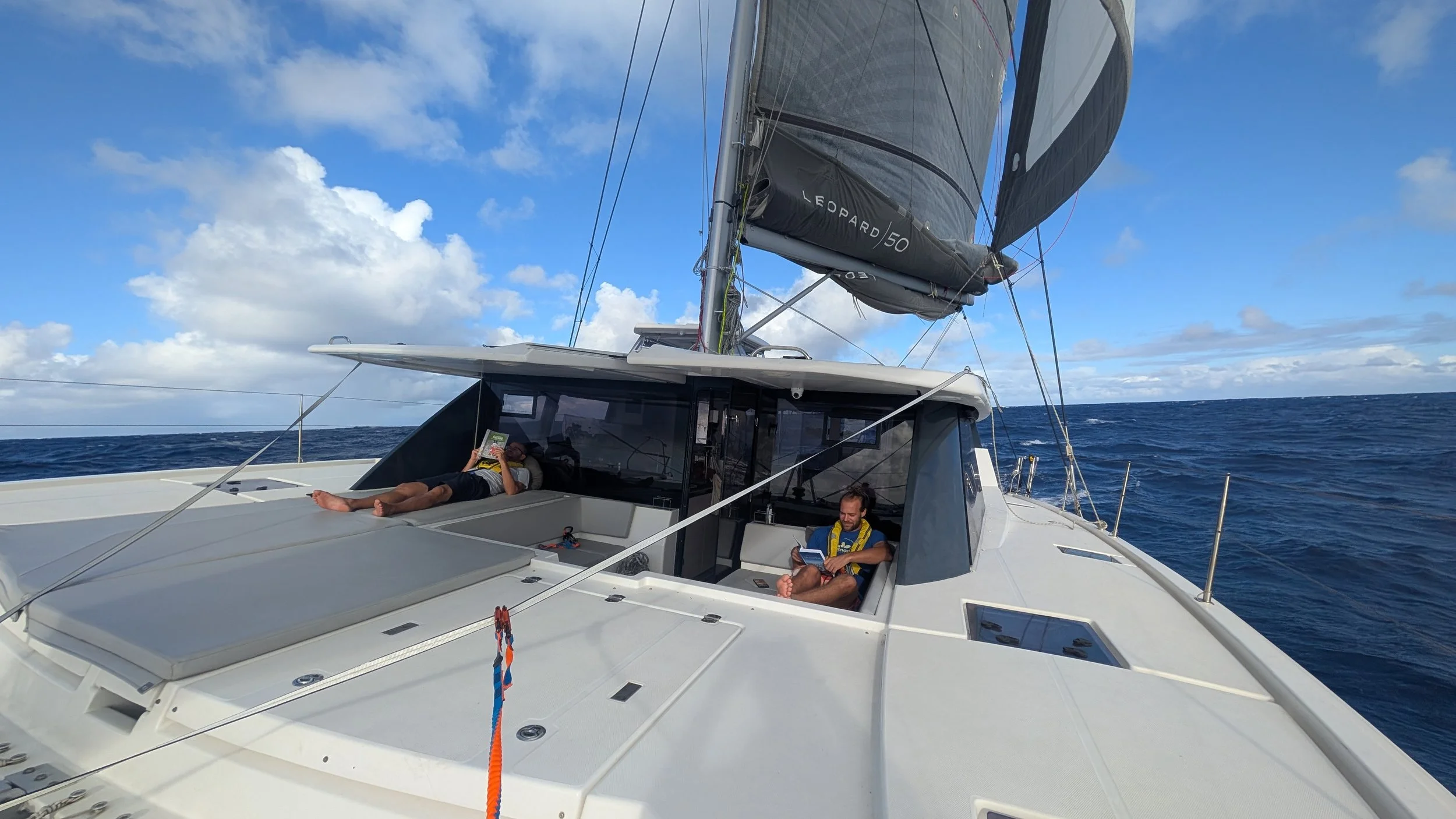
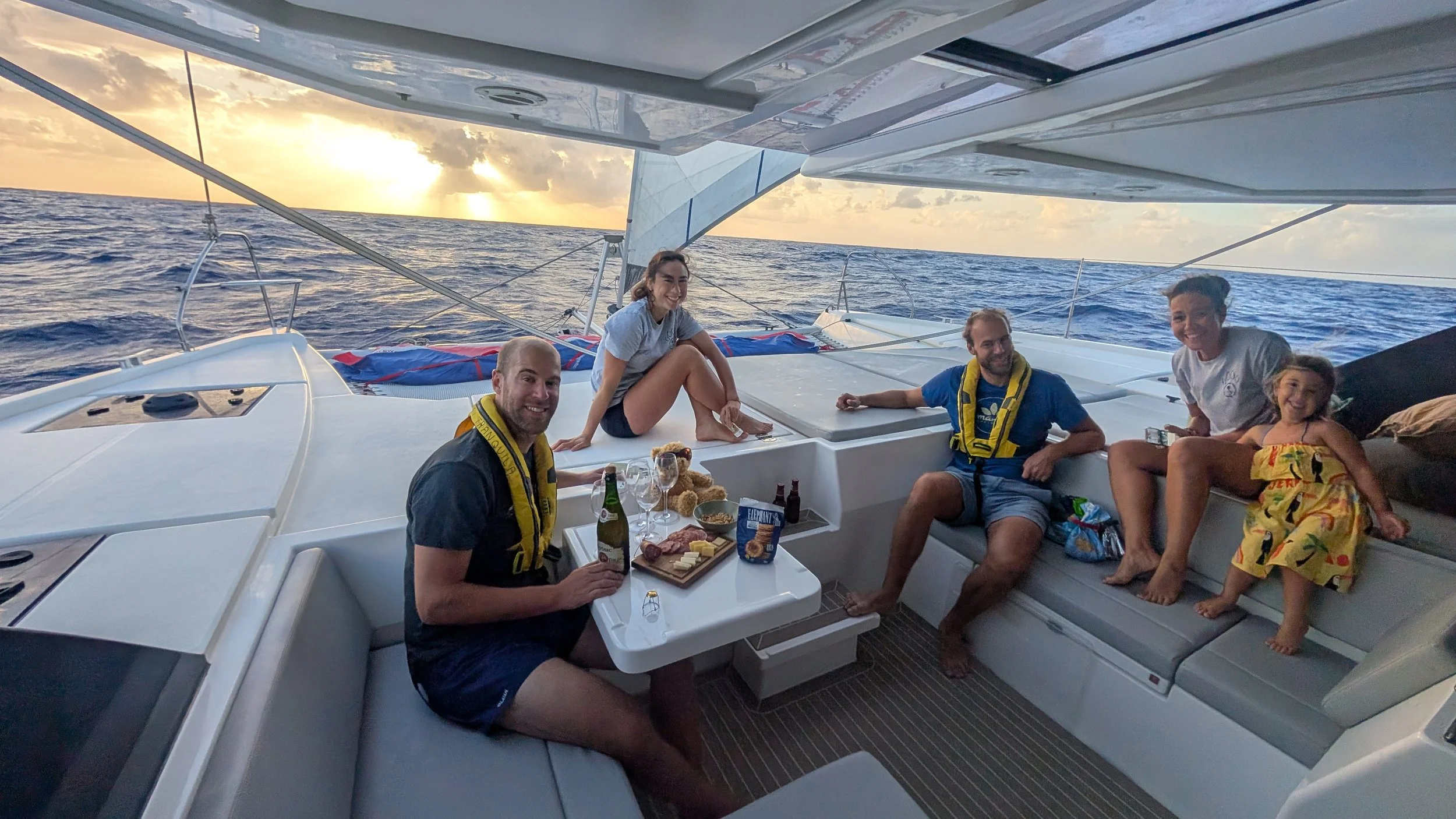
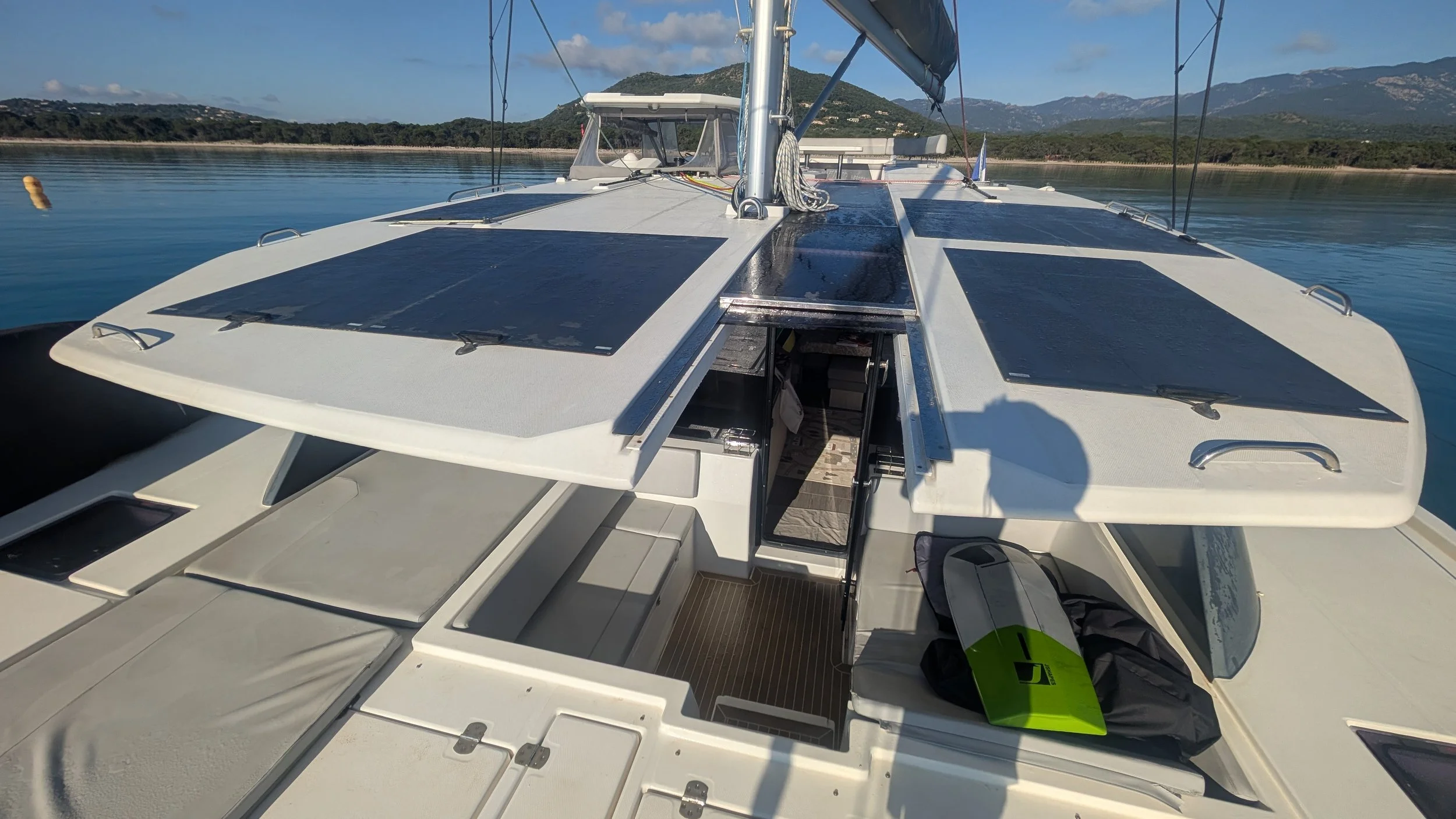
These are fantastic both at anchor and underway. Sundowners or morning yoga up top, quiet reading break or family brunch at the front... they offer more options to hang out together or take some (sometimes much needed!) time alone. Importantly they mean there is always a windy/windless sunny/shady spot where one can cool down/warm up when necessary.
When sailing in anything but the roughest conditions the front cockpit seats are perfectly safe and dry and a great place to get some fresh air and reduce seasickness. On top of that they make it easier and safer to reach the boom or the head sail when necessary.
Note that on the Leopard 45 and 50 the stairs to access the lounge are right behind the helm seat (but on the opposite side of the boat on other models), which we like because we can see/help the kids getting up and down from the helm.
🛋️ Internal layout and natural light
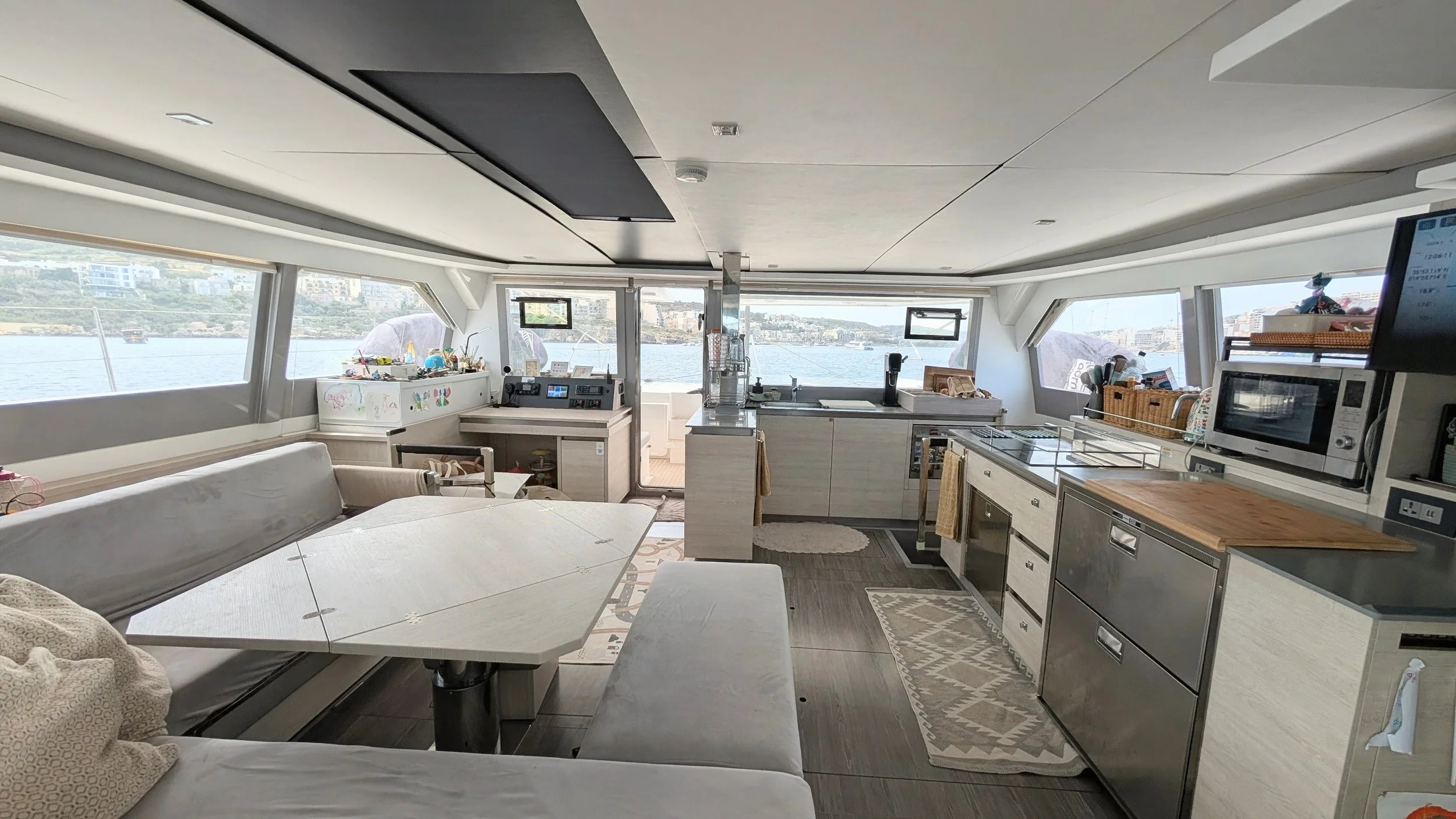
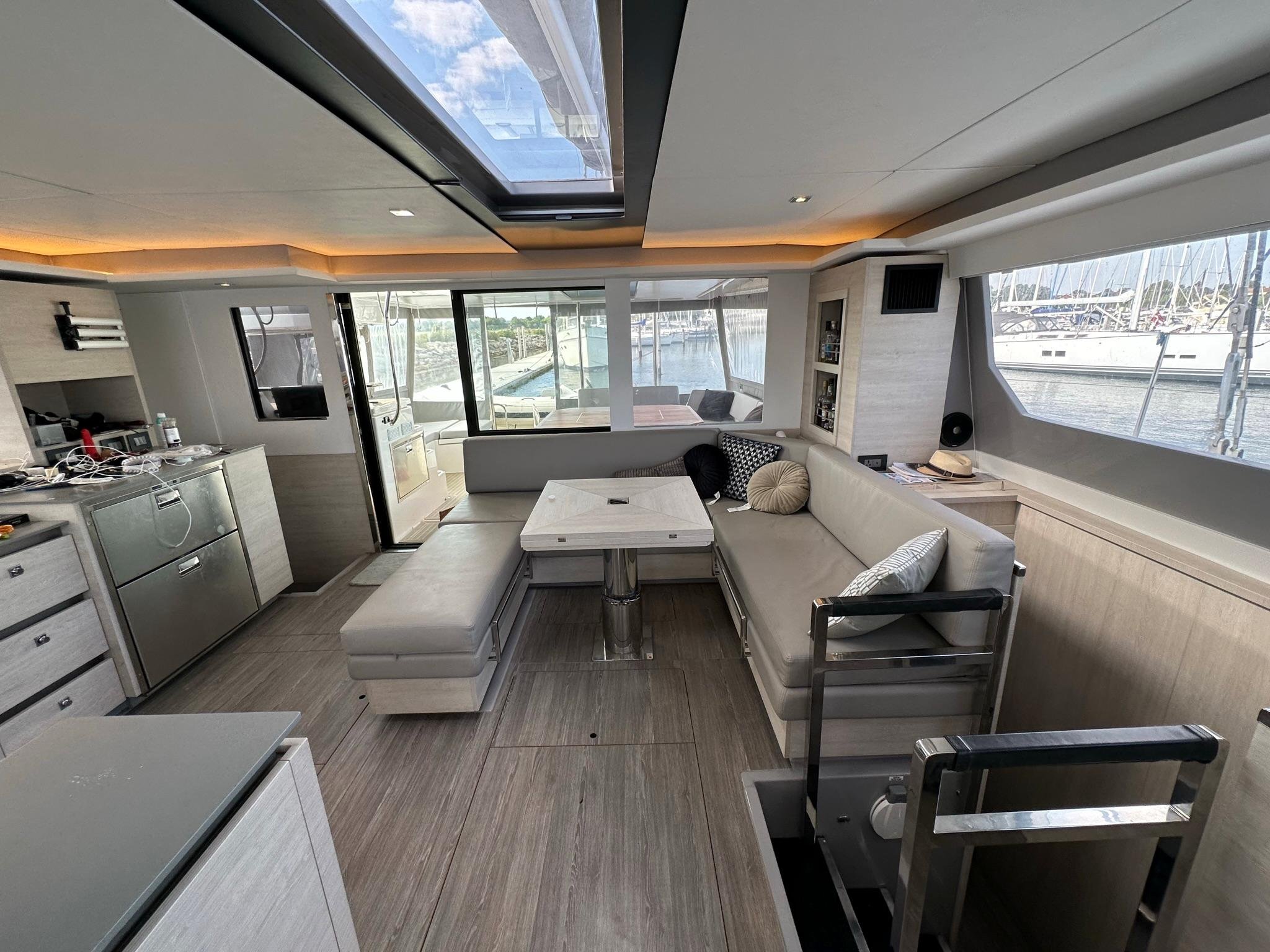
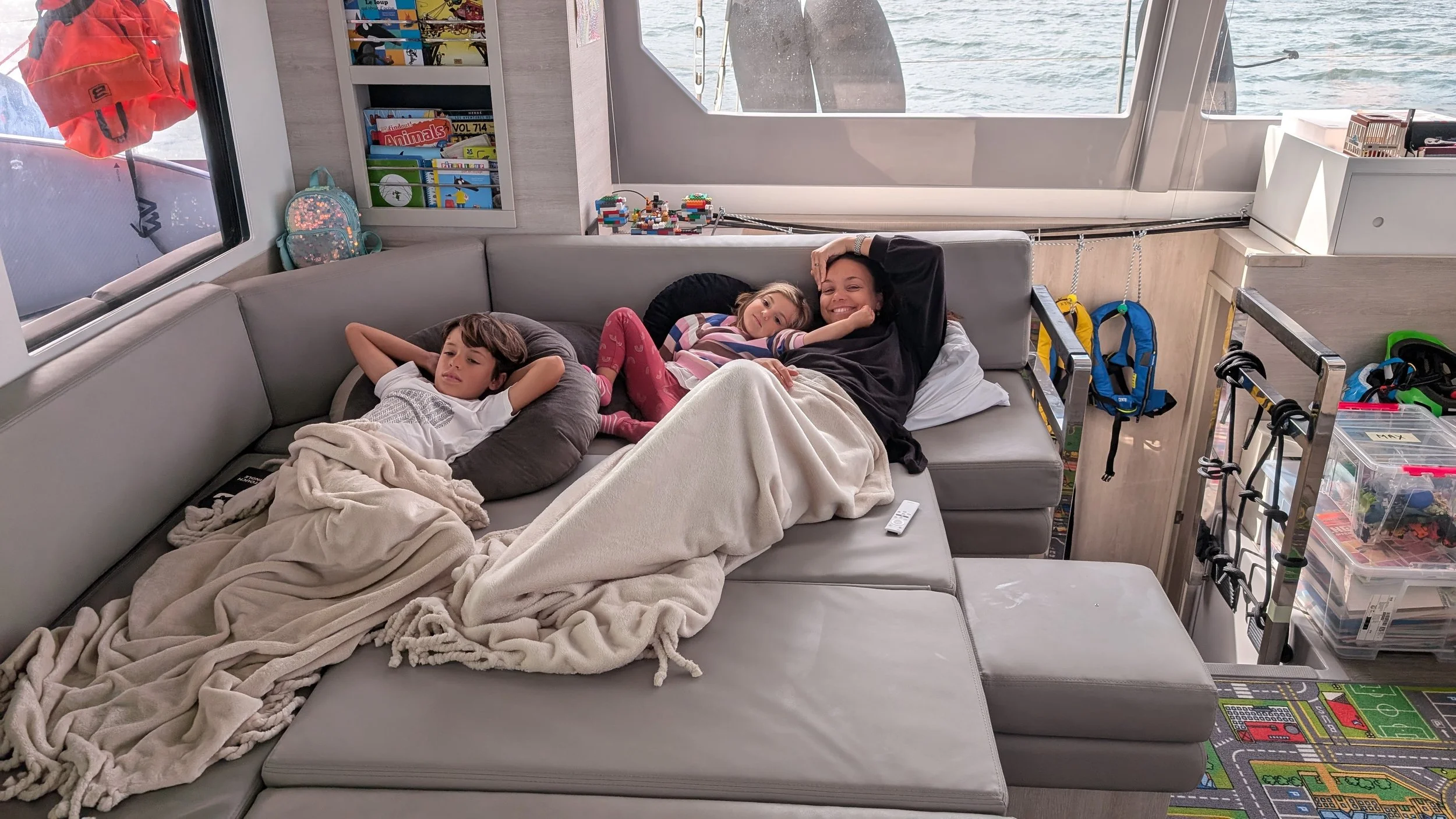
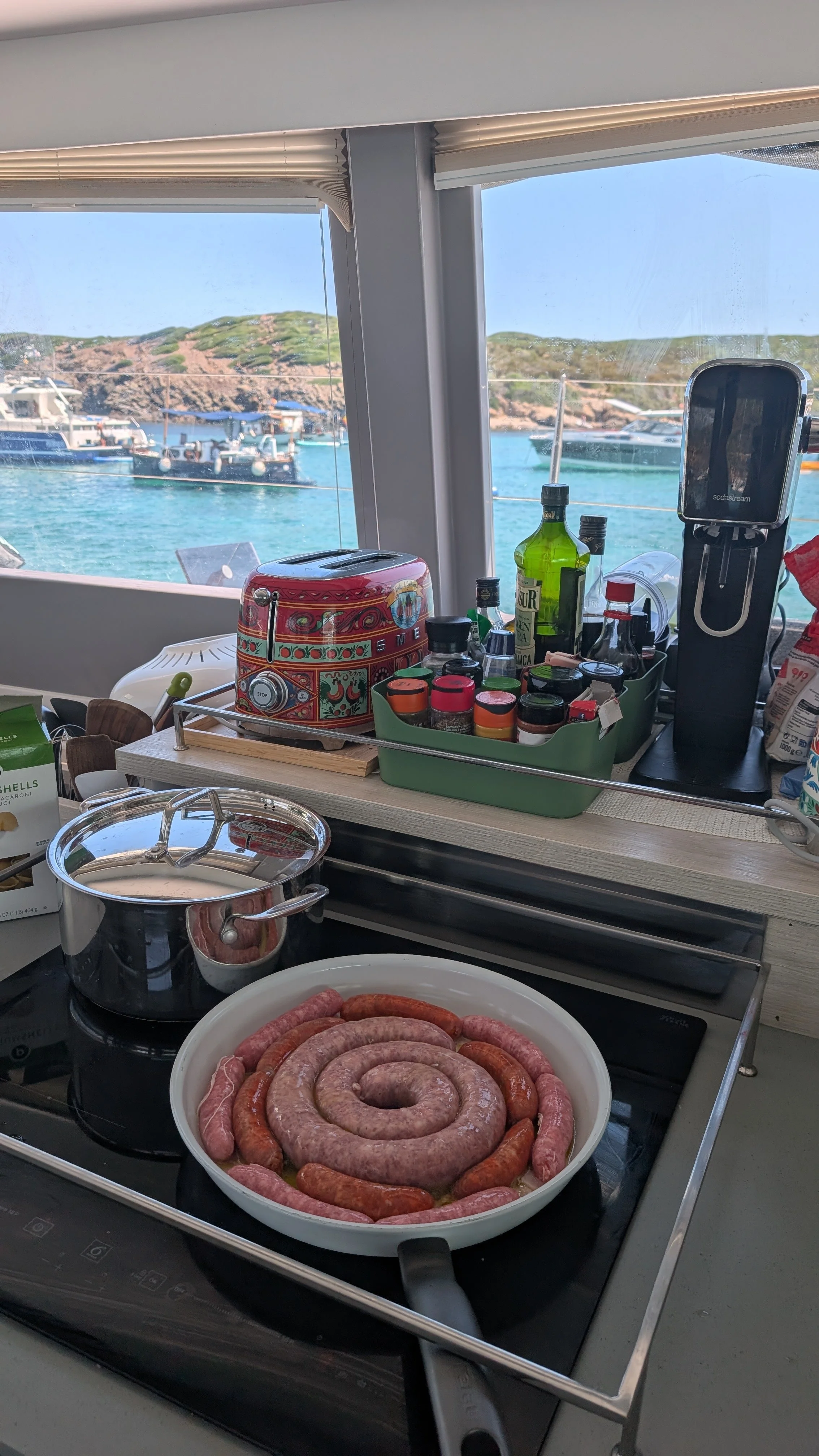
More unique to Leopard is the forward facing kitchen sink and full-height wrap-around windows in the salon. While this does make washing the dishes very pleasant, it also means there is great forward vision when seated inside which is convenient when having a meal underway or on watch duty from inside. The large skylight above adds even more natural light to make the salon feel bright and airy, with the added benefit of being able to see the mainsail from under. Plus the dining table lowers down to turn into a giant 5th bed, which is perfect for family movie night or as a watch bed during rough passages or night shifts (which the chartplotter mirrored on the TV).
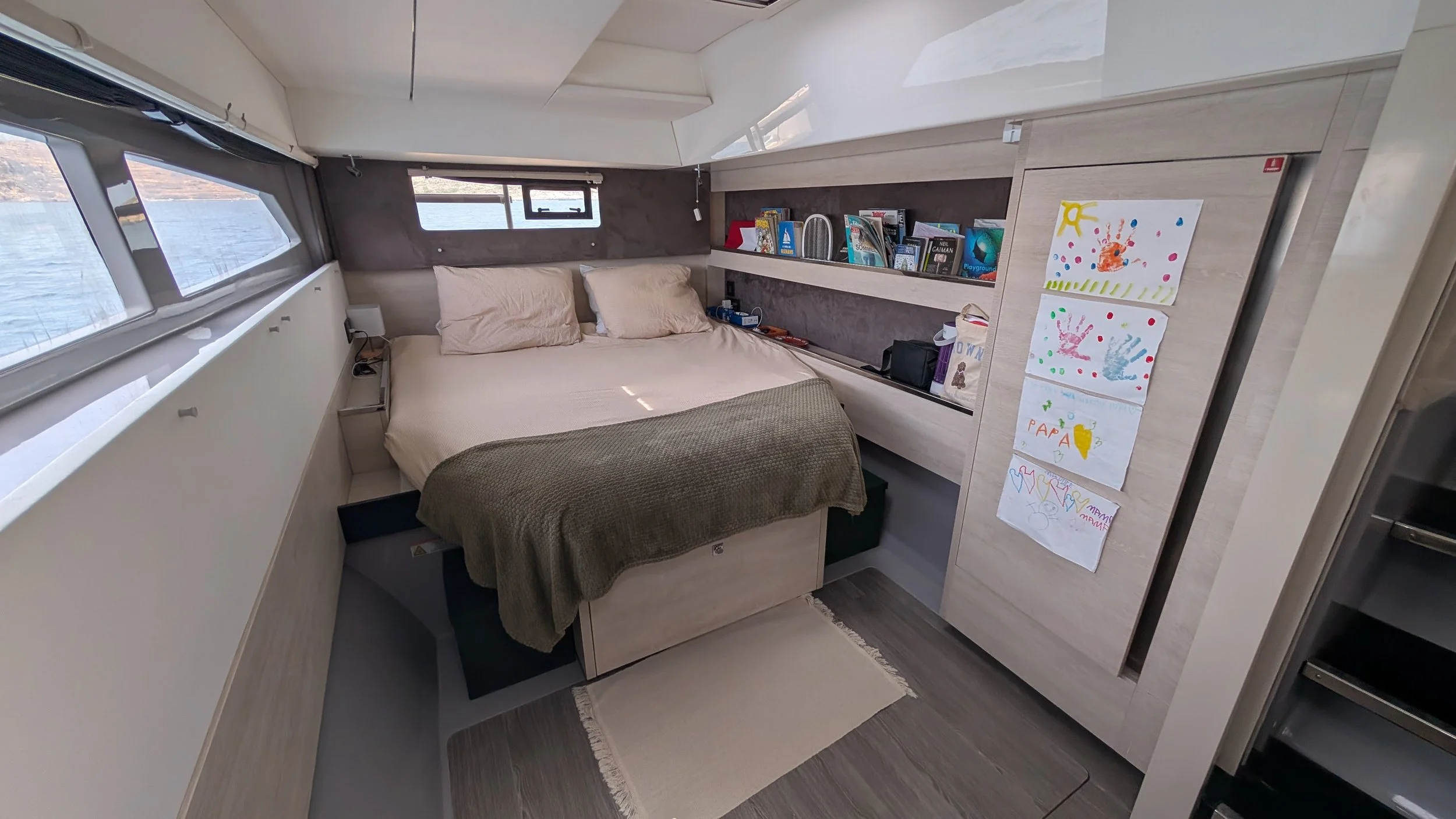
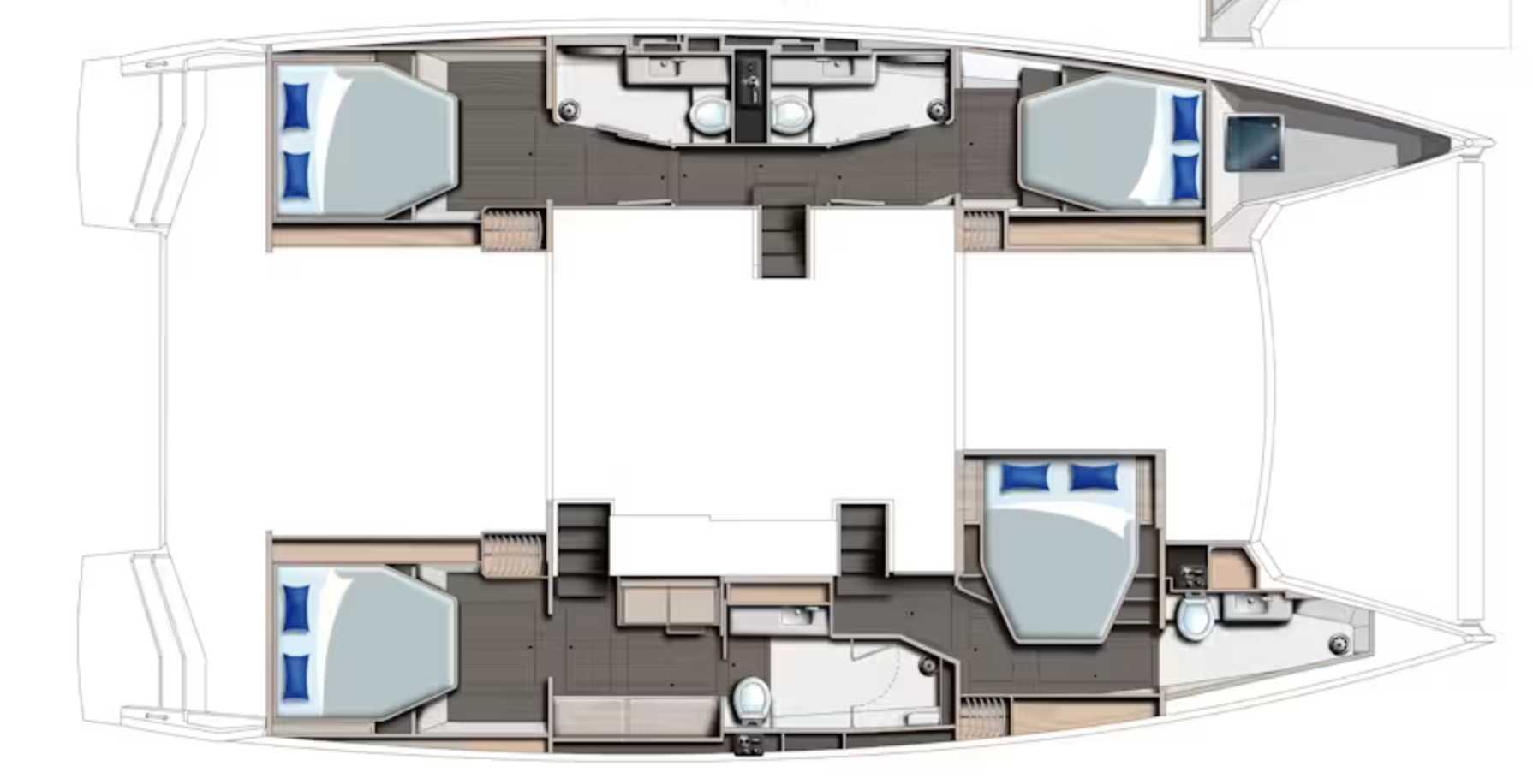
Many catamarans come in an “owner version” layout where the masters bedroom and ensuite take a whole hull. While this makes for a beautiful space, it means there’s only a total of 3 bedrooms. The Leopard 50 cleverly manages to offer an equivalent owners suite taking 2/3rd of the hull length with a full size 4th cabin in front of it. With the kids sharing one room that still leaves 2 for friends and family that we are planning to host regularly when cruising. Each of these rooms offer plenty of natural light thanks to full length windows.
💨 Shade and airflow
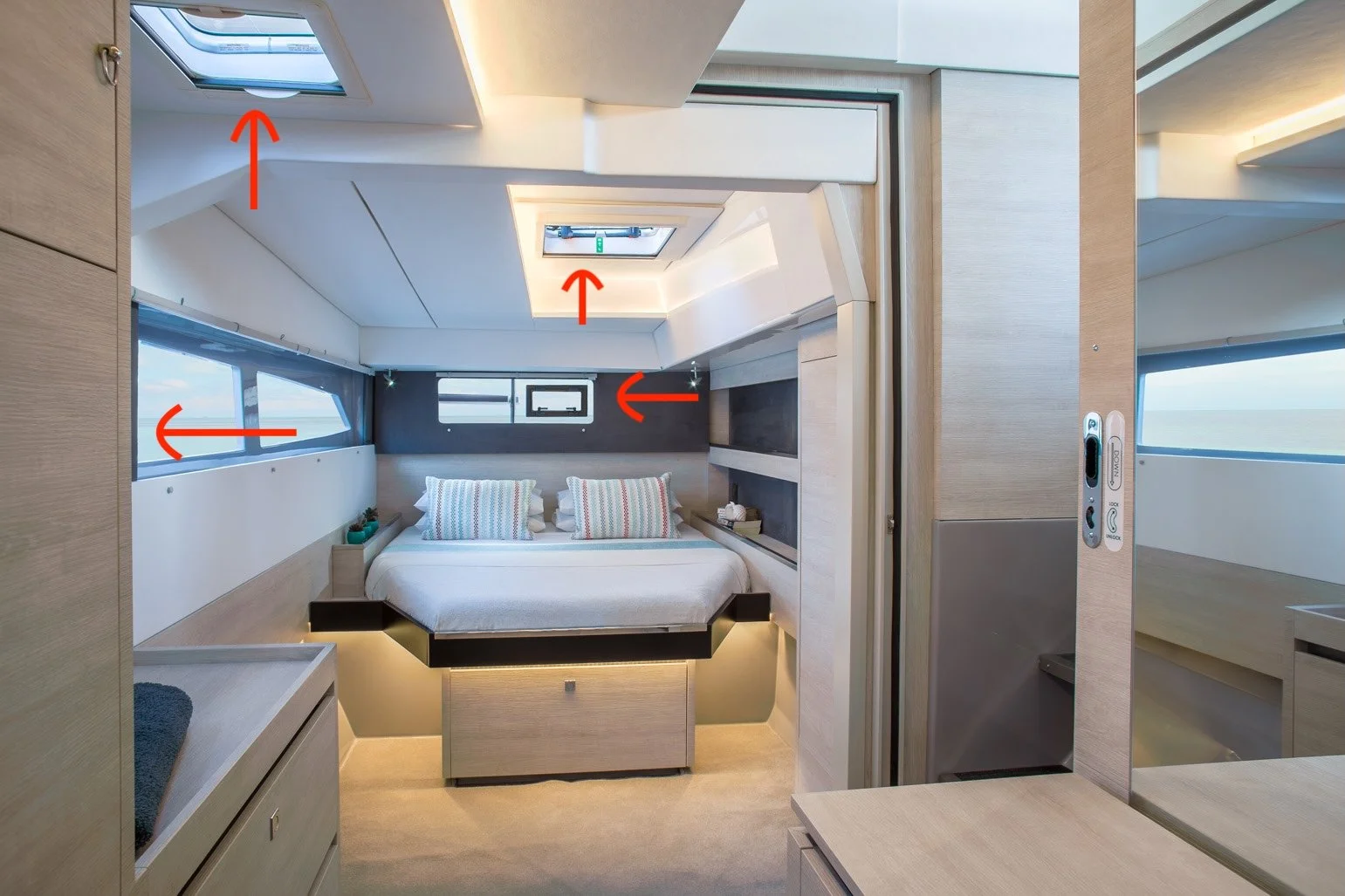
This is the big one that Leopard absolutely nailed, while some other manufacturers seem to have never actually cruised in warm and/or rainy places. Fiberglass boats are basically uninsulated green houses, so since most people sail during summer time or under the tropics, airflow is critical to avoid sleeping in hotbox hell or running energy-hungry aircon for those lucky enough to have it. The aft-cabins are typically the worst because with the curved shape of the hulls they do not get much of the head wind at anchor.
Thankfully on Leopard catamarans there is one large ceiling hatch, one side porthole and one rear porthole in the aft guest cabin. Plus another small ceiling hatch and side porthole in the ensuite. The master adds an extra small hatch in the room, and another large one in the bathroom, for a total of 7 openings!
Even better, the salon has 2 large portholes but also the front cockpit door which is almost 2m tall. Open it at anchor and close the aft cockpit one and all that anchorage breeze now heads down to cool down the cabins.
But in the tropics it often rains too, so don't we need to close the door and the portholes to avoid getting wet inside? No, because Leopard catamarans have that long "visor" ahead of the mast that covers the front cockpit. First it shades the windows from the sun to limit heating, but second it prevents rain from reaching the windows even when windy, so the door and portholes can remain open and do their cooling job, brilliant!
Looking at the salon windows angle on the comparison image at https://catamaranguru.com/48-50ft-catamaran-models-comparisons/ it is clear which one protects best from rain and sun.
🤩 Look and feel
The idea was to sail for a year or two, knowing if we potentially liked it, we could do another year (or more who knows now?), but a massive tick in the box was that we wanted our floating home to feel like, well…just that: a home!
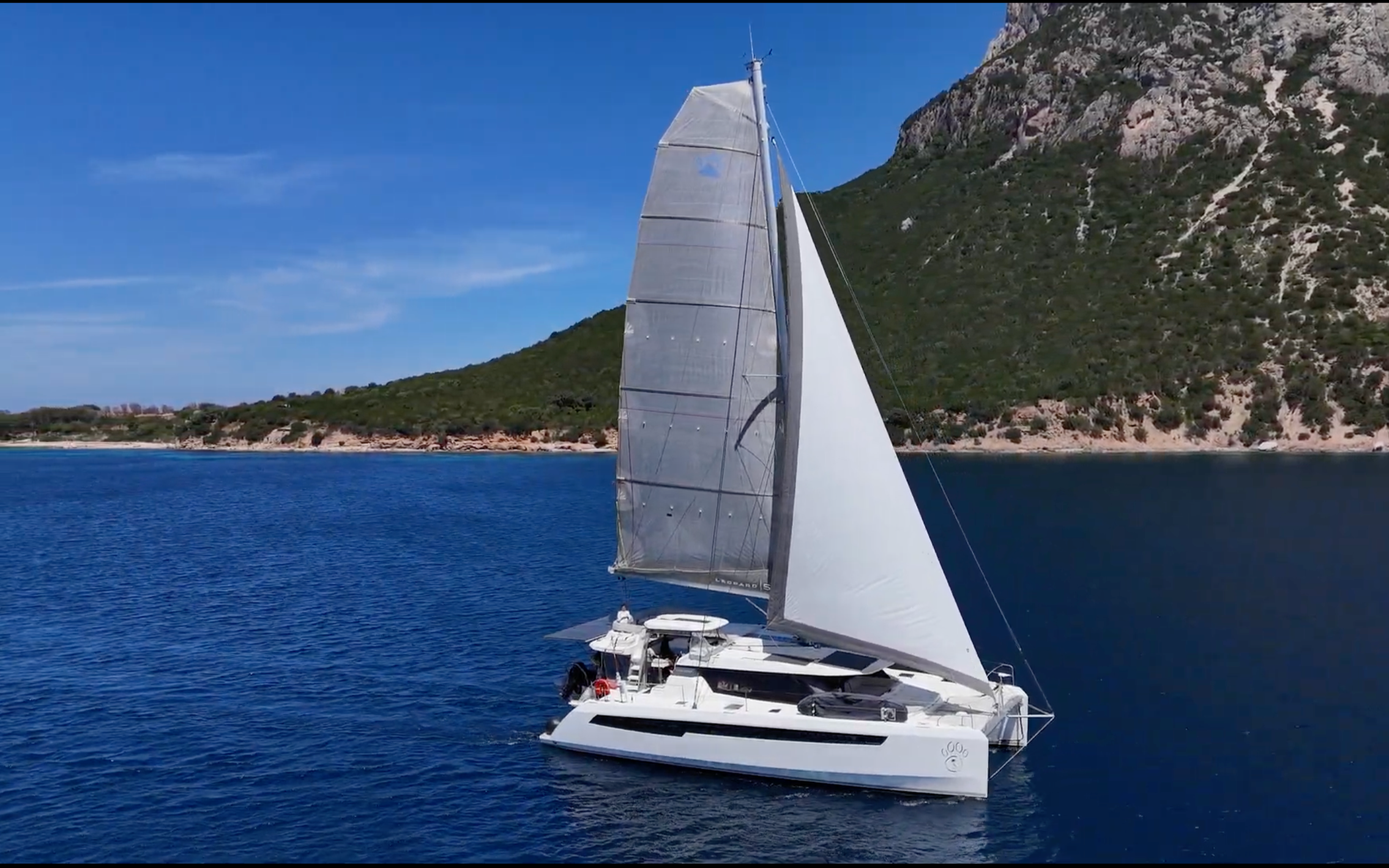
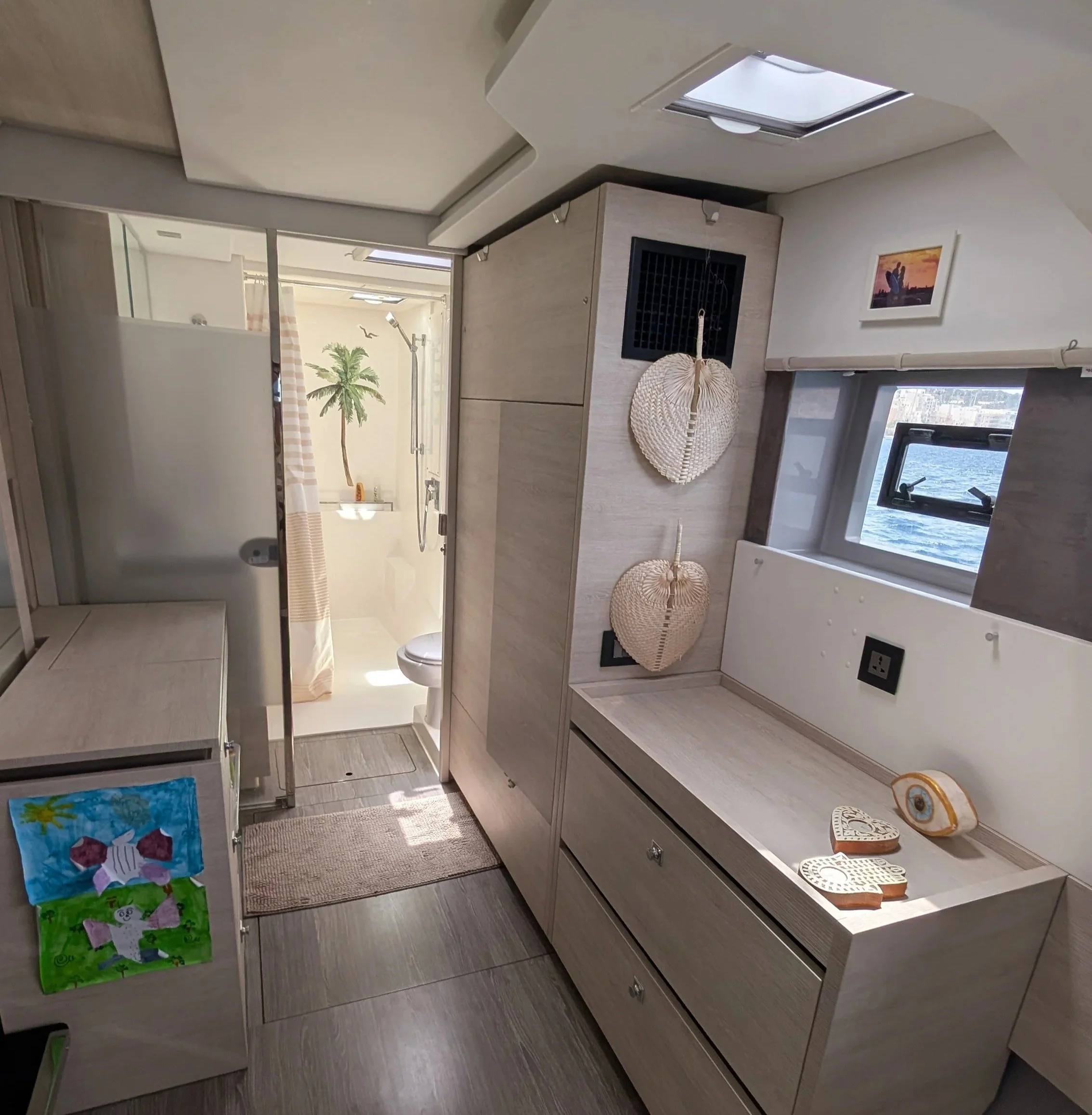
This is more subjective of course but we really like both the outside look of the Leopard catamarans, as well as the style of the interior with the light-colored & textured wood laminate. The interior gave the impression of higher quality and attention to detail than other catamarans within the same price range we looked at, for instance with rounded edges and stainless steel covers protecting most wooden corners.
Other considerations compared to closest competitors
Cable steering gives better feedback than hydraulic and easier to maintain/fix
Deeper keel and rudders should give better upwind performance
Higher bridgedeck clearance reduces slamming in heavy seas
No emergency escape hatches near the waterline (They have failed and sunk catamarans before. Leopard advises the front door is a sufficient way out, not sure how easy that would be upside down underwater but the chances of flipping a 20 tons catamaran are slim)
Specifically, why the Leopard 50 over the 45?
Given Antoine is 6'4''/1.95m and bangs his head multiple times a day in most boats we chartered, the extra headroom was necessary to keep him healthy long term!
More seriously between kids toys/books/school supplies, food/tools/spare parts plus our various watersport equipment (SUP, kites, wings etc) we felt the extra storage capacity wouldn't go astray. Plus the ability to have a roomy owners' cabin with 3 guest cabins was appealing as we planned to regularly welcome friends and family members aboard. A larger boat can also accommodate a larger (350kg) & more capable tender, which is valuable as it makes provisioning and exploring further away safer and easier.
We also expect the longer waterline and marginally deeper draft to bring slightly better performance upwind and in heavier seas.
The downside is of course budget, upfront and also during marina stays and for hauling out. Plus owners version of the Leopard 50 have a long wait time and used ones don’t come to market too often, particularly in Europe. But we were lucky to find our dream one for sale by its first owner at a price we could afford, and with a name that resonated with us: “Tranquila”
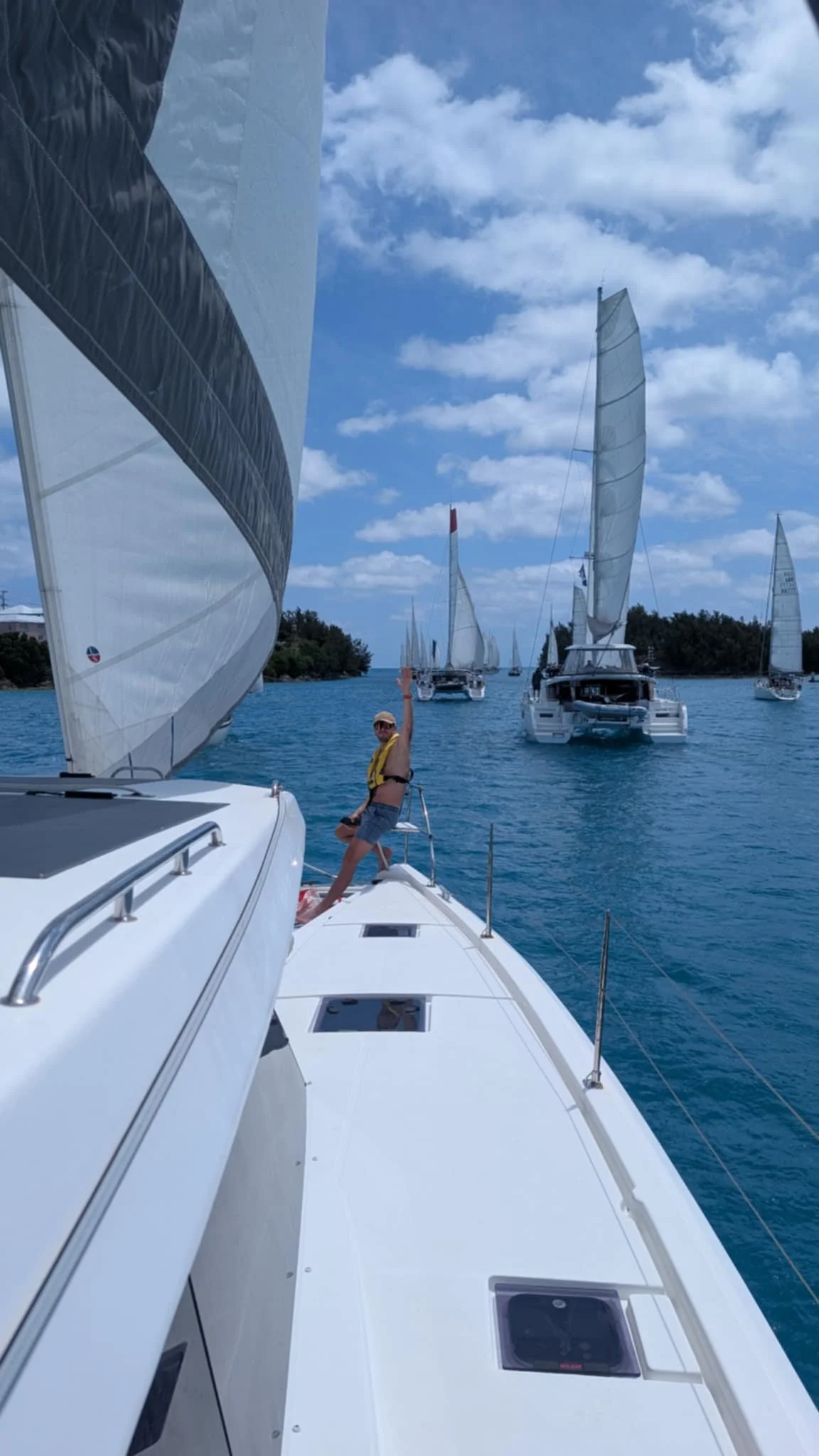
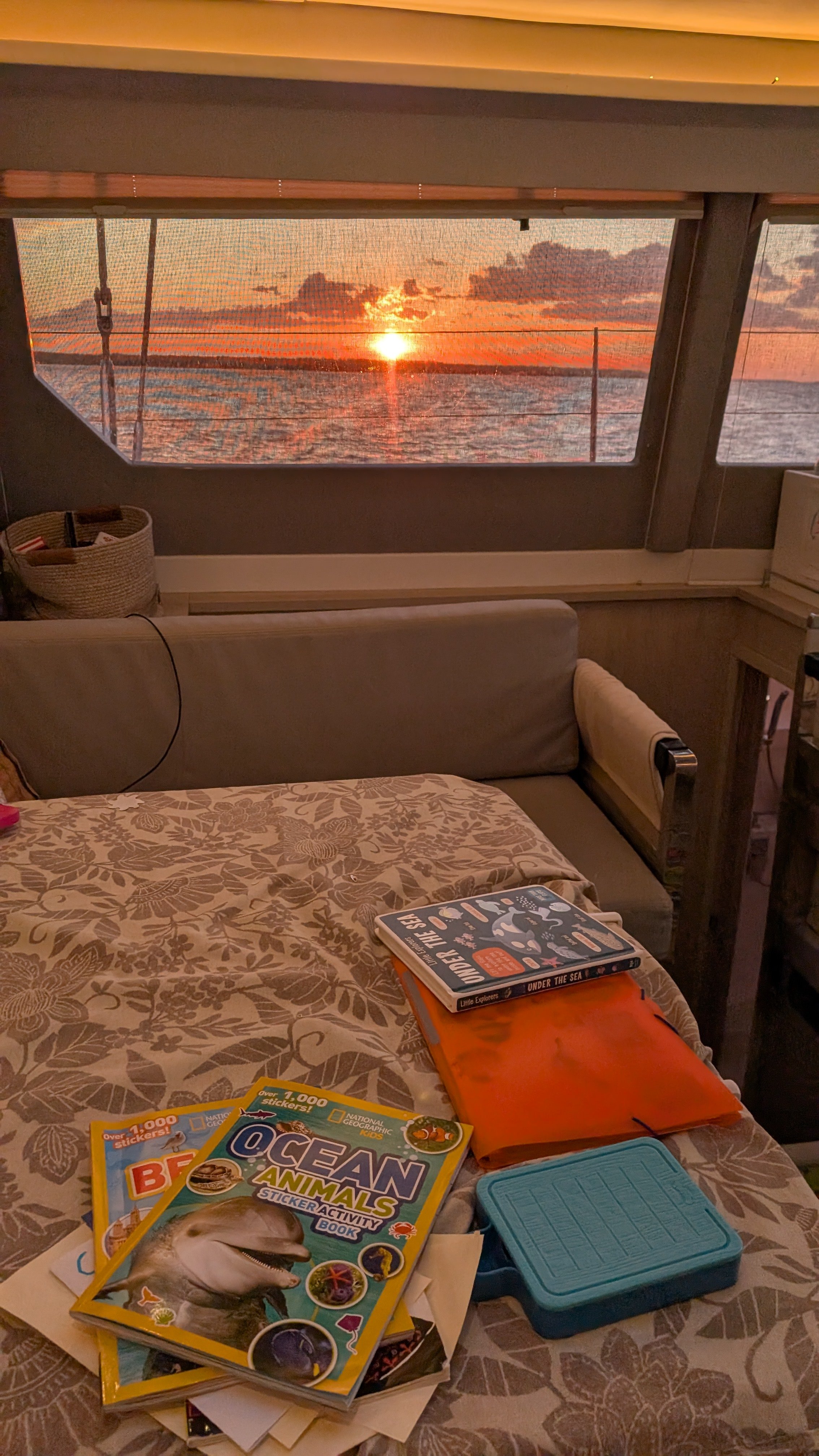
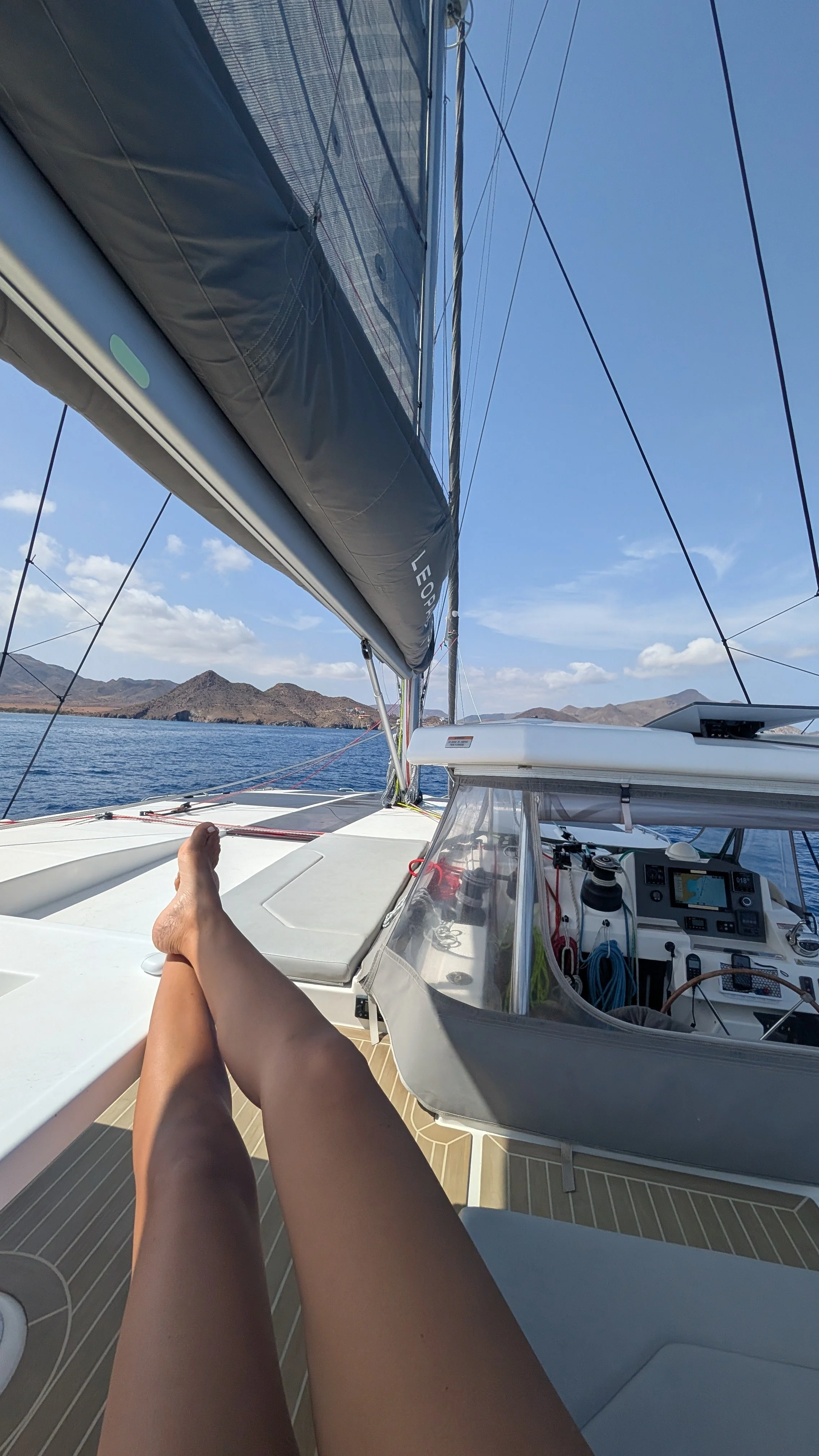
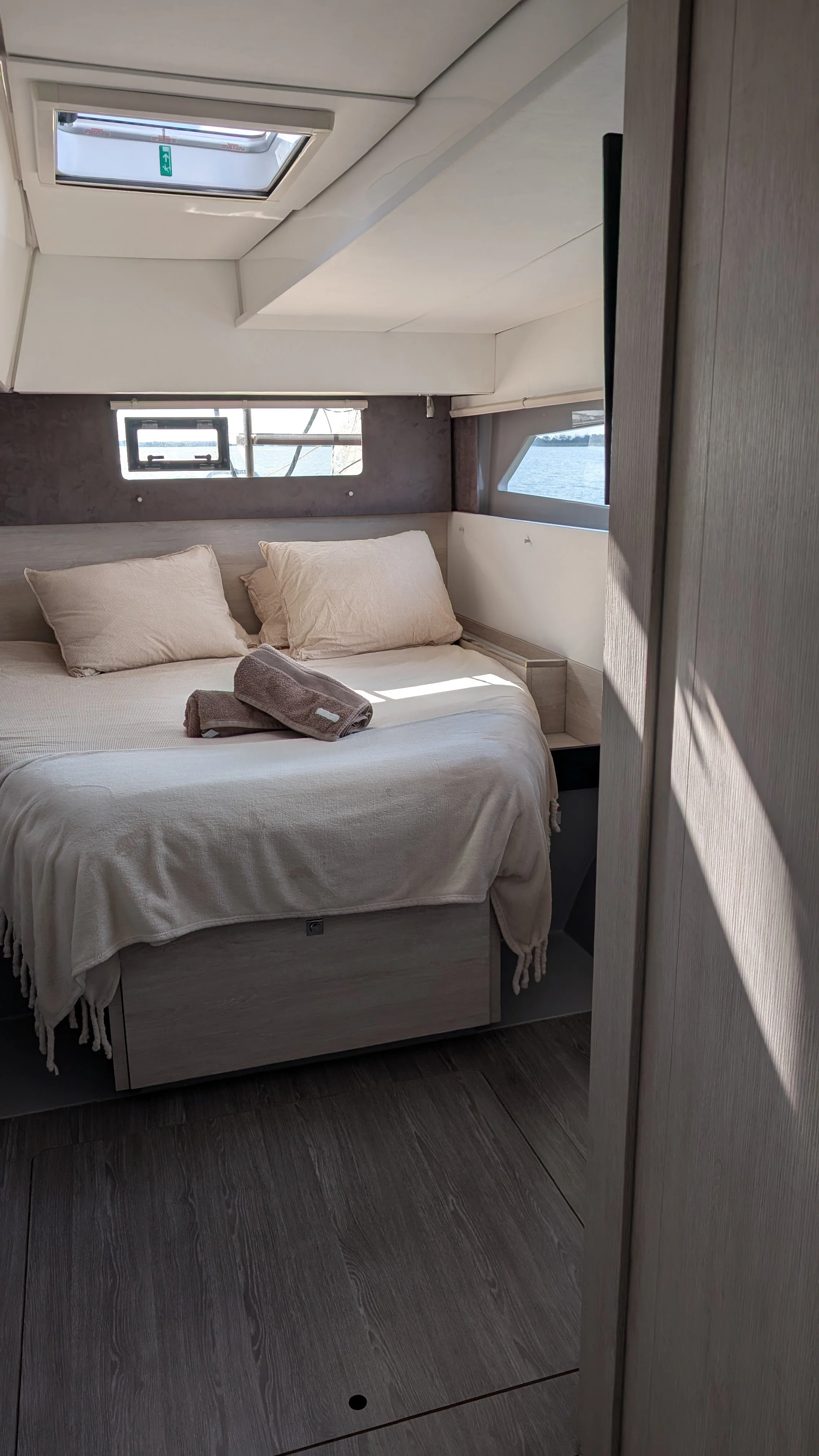
Update: 18 months ownership
After living and sailing on our Leopard 50 “Tranquila” for over a year are we happy with our choice?
Yes, very much so! It’s been a joy to live aboard the 4 of us and to welcome friends and families. Sailing over 15,000 nm from northern Europe to the USA and back she’s kept up safe and dry in all sort of conditions.
Is it perfect? No, off course no boat is. Here are a few things that have bothered us:
The Leopard 50 seems to be “aft-heavy”, possibly due to the initial hull design not incorporating the lounge or the dinghy platform. With diesel tanks full and a large dinghy loaded, there are a few areas (like the lie-down cushion starboard of the front cockpit and the secondary galley sink) where water doesn’t drain properly.
Storage space for food and appliances behind the stove by the window is difficult to access.
The placement of the WC right by the door of the master ensuite (with towel drying rack sitting directly above) feels awkward, we wish it was in a more “private” corner
It is difficult to tie lines to mooring balls from the forward hull-side cleats without rubbing on the hull or the crossbeam. We anchor most of the time but if we were using mooring balls a lot we would consider installing extra cleats or fairlead to address that.
Last but not least: the multiple built-in toe-killing features, such as the shore power inlet sticking out in a narrow passage, the tall bolts of the forward netting or the angled step beside the bottom of the helm.
Update: new Leopard 52
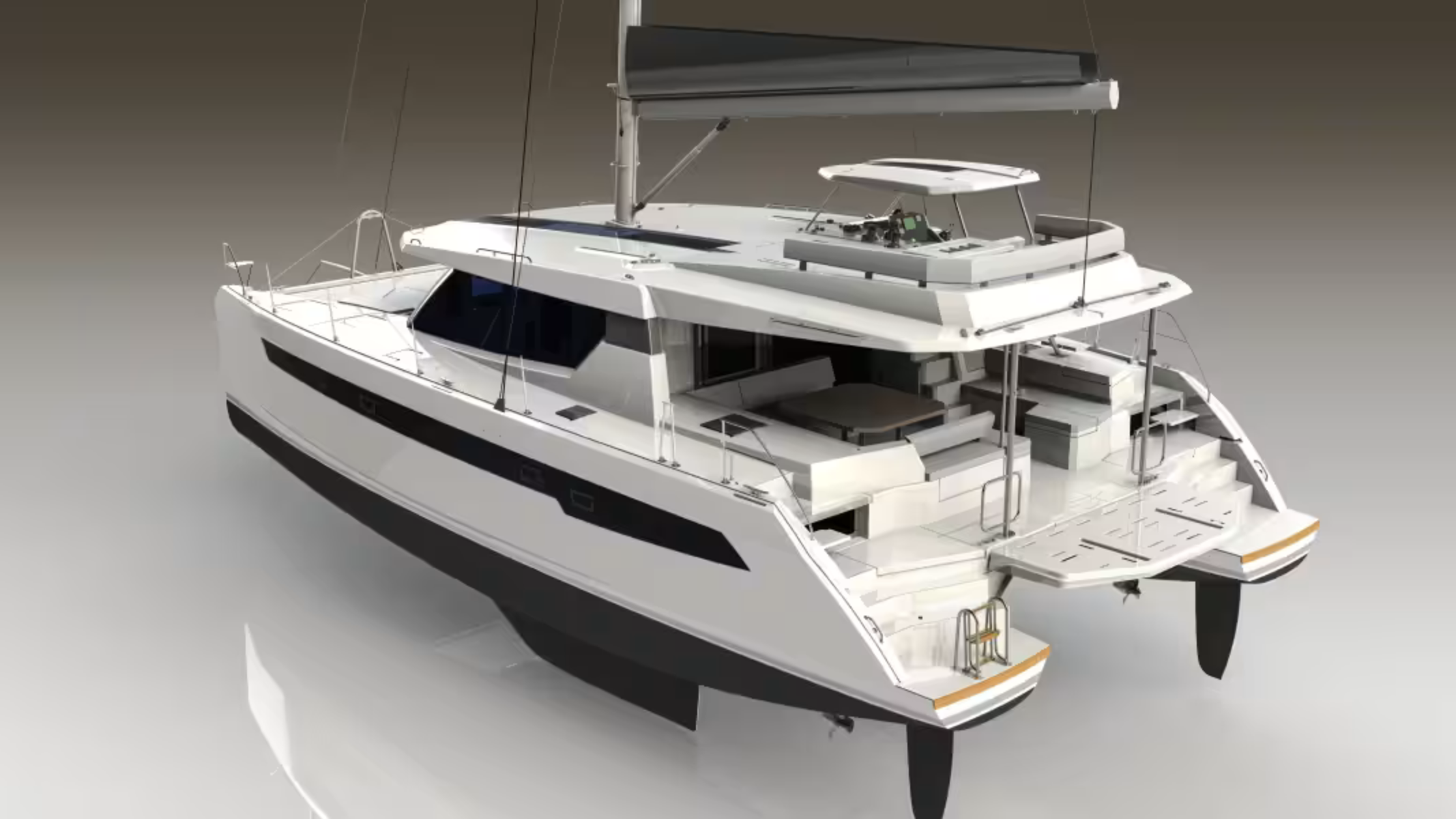
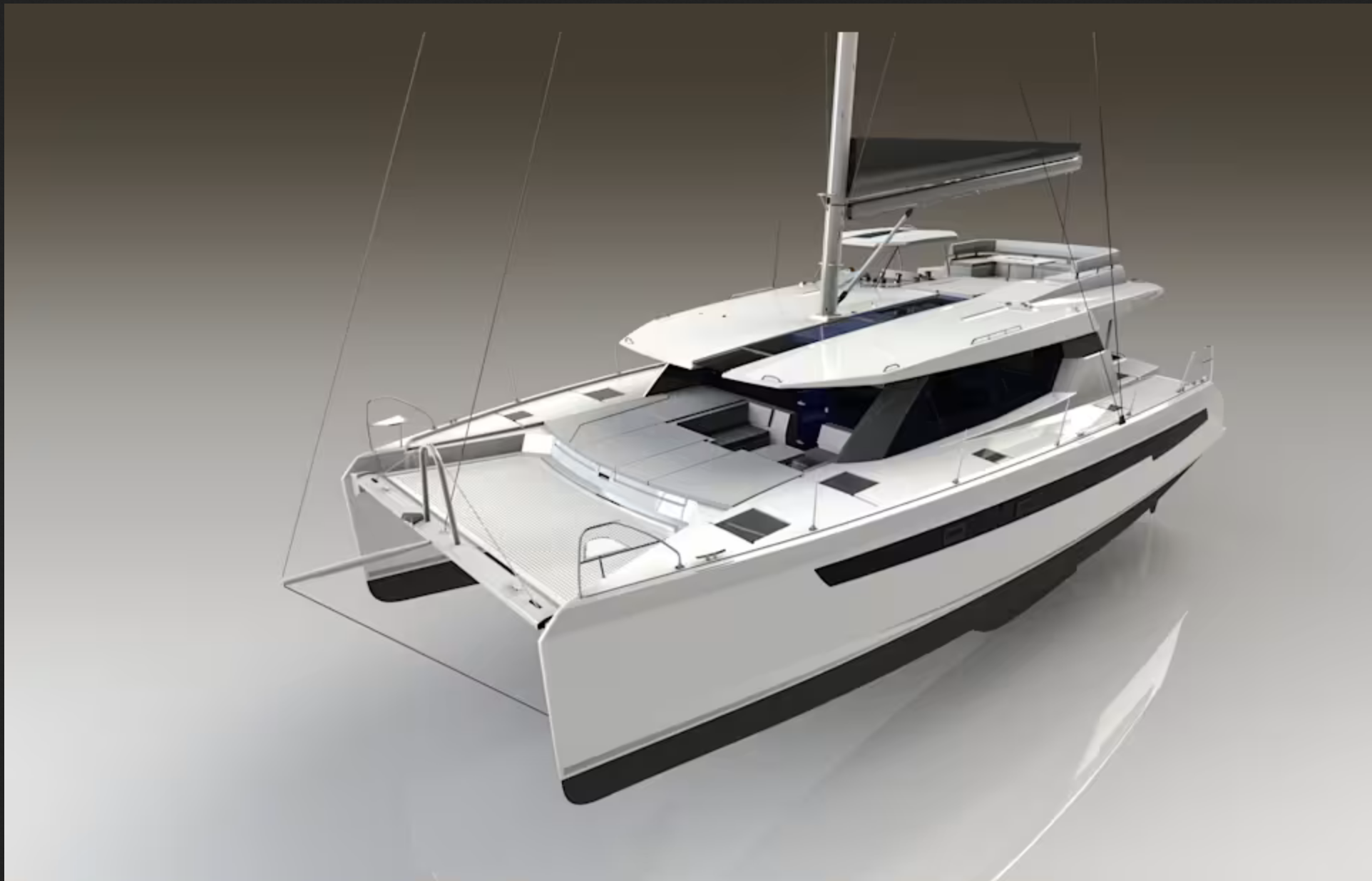
Leopard Catamarans recently announced the Leopard 52 as the successor of the Leopard 50. We got the opportunity to visit one at Leopard’s European office in the south of France and came away impressed! Here are some thoughts and observations in comparison to our 50.
Like:
The new port-aft cabin with amidship walk-around berth and rear outdoor access is fantastic! It would definitely make us reconsider where the “owners” one is.
Uninterrupted, taller and clearer glass windows in the saloon
Safer U-shape area around the sink and dishwasher, neat built-in food storage space organizer behind the stove
New modern helm dashboard and seat are neat
Overall quality of wooden furniture and upholstery is another level above the 50 which was already very good
Stiffer single-piece hull and larger rig for better performance
Full digital switching and electric motors option!
Dislike:
Due to the built-in solar panels area, the roof lounge is smaller and closer to the mast than on the 50, while the skylight is gone
The forward visor and front cockpit appear to be a little smaller, and the solid black triangles on the side that protects from sea spray have been removed
